
Scientific Departments
—
Genome dynamics
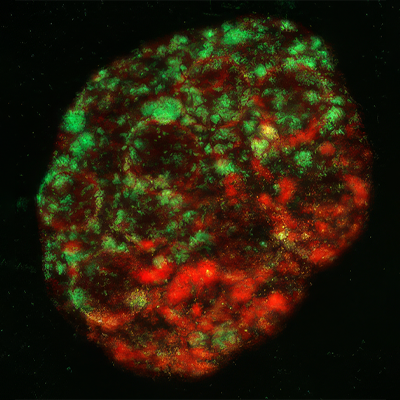
The department of Genome Dynamics comprises research groups dedicated to studying the various molecular activities of the genome in model organisms such as Drosophila, Xenopus, mice, and human cells.
Their work centers on processes regulated both genetically and epigenetically, including DNA replication, recombination, chromosome segregation, transposition, transcription, RNA splicing, chromatin structure, and chromosome organization.
The groups engage in collaborative interactions that enable the exchange of technologies, expertise, and knowledge. These collaborations support projects aimed at uncovering the molecular mechanisms behind these genome-related processes, utilizing a broad spectrum of biochemical, molecular, cellular, genetic, genomic, and bioinformatic methods. This integrated approach fosters technological innovation and a comprehensive understanding of genome biology.
Department head: Jérôme DEJARDIN
 Charlène BOUMENDIL
 Giacomo CAVALLI
 Séverine CHAMBEYRON
 Jérôme DEJARDIN
 Bernard DE MASSY
 Rosemary KIERNAN
—
Genetics, cell biology and development
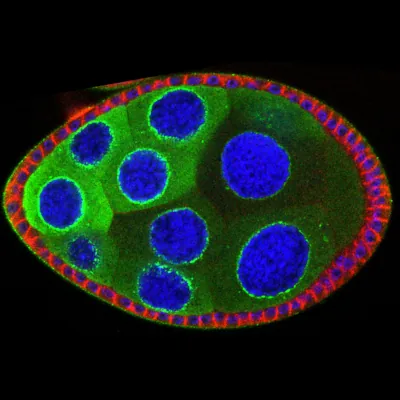
The Department of Genetics, Cell biology and development studies how genetic information is translated into the formation of diverse cell types that are organized into a complete organism.
The groups address a range of developmental genetic questions, from the establishment of cell polarity in the egg to germ line and gonadal development, stem cell biology and neuronal differentiation. Several groups investigate RNA silencing by small non-coding RNAs, post-transcriptional and post-translational regulation mechanisms. Research programs are primarily based on model organisms such as Drosophila and the mouse, and involve a variety of techniques including genetics, cell biology, genomics and bioinformatics.
The Department has strong expertise in advanced imaging approaches and the development of such approaches. It maintains tight collaborations within IGH and with nearby institutes, contributing to the understanding of molecular mechanisms that underlie human genetic diseases, tumorigenesis, and regenerative stem cell biology.
Department head: Martine SIMONELIG
 Edouard BERTRAND
 Kazufumi MOCHIZUKI
 Francis POULAT
 Krzysztof ROGOWSKI
 Hervé SEITZ
 Martine SIMONELIG
 Sora YANG
—
Molecular bases of human diseases
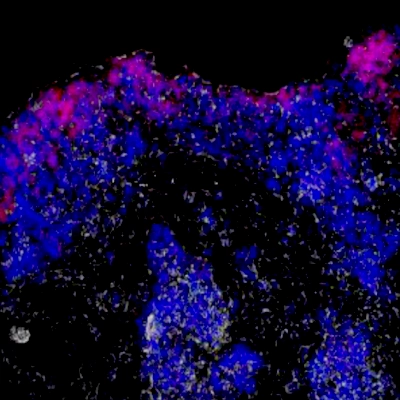
The department Molecular Bases of Human Diseases conducts high-level research focusing on immunology and cancer, aiming to advance both scientific understanding and health outcomes. This includes investigating how DNA lesions trigger DNA damage responses in cells and influence tumor progression.
The department explores the molecular interplay between the DNA damage response, chronic inflammation, and cancer, recognizing that defects in genome maintenance and repair underlie tumor development and can be harnessed therapeutically. Key research programs also address the molecular and cellular mechanisms sustaining HIV reservoirs and profile immune activation in HIV-1 patients.
The department hosts IMGT®, the international ImMunoGeneTics information system®, which is a major resource for immunogenetics research. This multifaceted approach, integrating cancer biology, DNA damage response, and immunology, positions the department at the forefront of efforts to dissect disease mechanisms and improve treatments.
Department head: Domenico MAIORANO
 Jihane BASBOUS
 Monsef BENKIRANE
 Sofia KOSSIDA
 Domenico MAIORANO
 Jérôme MOREAUX
 Philippe PASERO
 William RITCHIE
